Please note that while these services apply to most courses, exceptions may occur. Even in locations where we have dedicated classrooms, we may occasionally need to rent external spaces nearby, and the availability of services may vary. Kids, pets, or guests within the school premises must be approved by email each time. Whether or not our premises are marked as wheelchair accessible, we kindly ask you to inform us in advance. If accessibility is an issue, we will arrange for an external classroom to accommodate your course. If you have any questions, please don't hesitate to reach out to us.
Our Cultural Activities
A Lisboa Card is included in the price of each Erasmus course in Lisbon, which includes:
Free entrance to 35 places of interest (among the ones available Belém Tower, Jerónimos Monastery, Santa Justa Elevator, National Pantheon, and Mafra National Palace are some of the most popular)
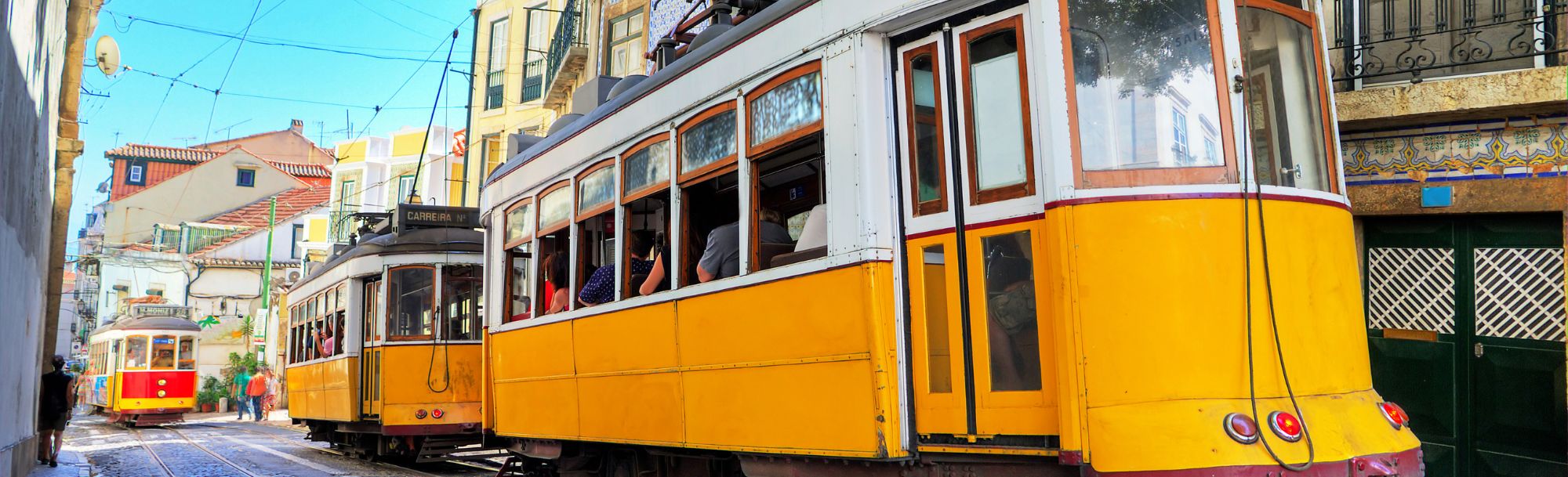
Free access to the city’s public transport
Our Academy in Lisbon
Europass Academy Portugal LDA, the company in charge of delivering courses in Lisbon, is legally established in Portugal and operates under accreditation by Europass Foundation.
All our teacher training courses in Lisbon will take place either in the morning (9.00-14.00) or in the afternoon (14.00-19.00), depending on classroom and trainer availability.
The final schedule will be sent two weeks before the course begins. We recommend planning any cultural activities only after receiving it.
How to reach us
Lisbon is primarily served by Lisbon Portela Airport (LIS), located approximately 7 kilometers from the city center.
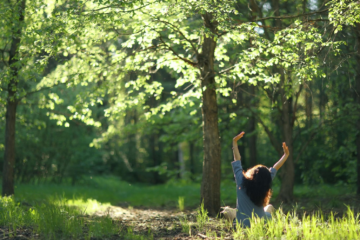
Explore the calming and restorative power of nature, and how you can bring it into your school or classroom. Experience outdoor mindfulness and creativity-based activities, and discover how nature can support your emotional well-being, even if you have a basic level of English.
Decolonizing History Education: Teaching Through Multiple Perspectives
Engage in well-being and mindfulness activities outdoors, around city parks and gardens, and delve into nature-inspired activities during classes. Design a physical space and program to integrate nature into lessons and the school environment.
Decolonizing History Education: Teaching Through Multiple Perspectives
Discover how to build and implement PBL strategies in the classroom, incorporating activities and information from museums and cultural heritage sites into these projects.
Decolonizing History Education: Teaching Through Multiple Perspectives
Discover online applications and environments, focusing specifically on web solutions that foster inclusivity and sustainability, in order to boost collaborative work, creativity, and engagement.
Decolonizing History Education: Teaching Through Multiple Perspectives
Acquire the knowledge, the know-how, and the confidence to insert the 4Cs skills into the curriculum and school environment. Learn to design practical activities using ICT resources, which are more efficient at developing the 4Cs in students.
Decolonizing History Education: Teaching Through Multiple Perspectives
Discover how to blend AI tools with education to enhance soft skills among students. Gain practical AI tool insights and storytelling skills to transform your teaching and inspire students across all subjects, preparing them for a future intertwined with AI.
Decolonizing History Education: Teaching Through Multiple Perspectives
Develop an understanding of the notions of formative feedback and active learning in the context of student-centered learning methods. Discover how to develop a plan to introduce changes to your curriculum to avoid ineffective teaching.
Decolonizing History Education: Teaching Through Multiple Perspectives
Learn an array of new ways to boost participation, motivation, and confidence in the classroom through the implementation of innovative solutions that are more practical and expressive, and therefore, more enjoyable.
Decolonizing History Education: Teaching Through Multiple Perspectives
Gain a deeper understanding of key environmental issues (even with low English proficiency) such as biodiversity, pollution, climate change, and sustainability. Explore how education can raise environmental awareness in order to promote eco-friendly habits in your schools.
Decolonizing History Education: Teaching Through Multiple Perspectives
Acquire crucial knowledge to use, select, and effectively incorporate ICT tools in everyday teaching in order to boost creativity, motivation, and engagement.
Decolonizing History Education: Teaching Through Multiple Perspectives
Explore the educational benefits of GBL and gamification methodologies. Learn how to design and implement effective lesson plans and how to use them efficiently when discussing sustainability.
Decolonizing History Education: Teaching Through Multiple Perspectives
I attended the course '5 Steps to Improve Teaching and Learning' in Lisbon at the beginning of May 2025. The atmosphere was pleasant, and the teacher was doing her best. However, based on my experience with several similar courses, the level of English language… More proficiency among the participants, including the teachers, was not very high. This, I believe, is a significant general disadvantage for such programs. For English teachers, in particular, the linguistic aspect often offers little benefit and can even hinder their professional development. The course itself was well-structured. Personally, I didn't learn much that was new, likely because my school and country have already been implementing these methods for a long time.
Overall, the experience was somewhat disappointing compared to other courses I've attended at the same academy in Athens, Rome, Helsinki, and Barcelona. In those locations, we also received more comprehensive materials and resources, and we had access to kitchen and rest areas. Furthermore, we were offered brunch and generally felt more welcomed. While the Lisbon venue itself was beautiful, we were informed that we were not permitted to use certain parts of it. In the aforementioned locations (Athens, Rome, Helsinki, Barcelona), we were also welcomed with excursions, guided city trips and tours, as well as local transportation passes. In Lisbon, we only received a 24-hour Lisboa card.
On a positive note, the course did provide an opportunity to experience other cultures and EU values, and making contacts and sharing experiences with fellow participants is always beneficial."
I participated in the course "Action Plan for a Sustainable Classroom and School" in Lisbon, from 2 to 10 May 2025. A very nice experience, the excellent, approachable teacher Florence Neumann prepared and designed the course perfectly. A creative week spent… More with plenty of new ideas, meeting nice people of various nationalities and useful for improving English language skills.
Course Review – “ICT Tools for a Creative and Collaborative Classroom” (Lisbona, June 23–27, 2025)
I had the pleasure of attending the “ICT Tools for a Creative and Collaborative Classroom” course organized by Europass Teacher Academy in Lisbon from June 23 to 27,… More 2025.
It was a truly enriching experience, both professionally and personally. The group was very diverse, with teachers from primary schools to universities, mostly from secondary education. This mix made the exchange of perspectives even more valuable.
Our trainer was not only extremely professional but also fun and engaging, which is exactly what she taught us: how to co-construct knowledge and make learning enjoyable for both teachers and students.
We explored a wide range of digital tools, experimenting with them hands-on and reflecting on how we could apply them creatively in our own classrooms. The activities were dynamic, collaborative, and often playful – a perfect model for 21st-century teaching.
One of the most inspiring parts of the course was the opportunity to connect with teachers from other European countries. We shared experiences, challenges, and ideas, comparing how our students are changing and how our educational systems are evolving. These exchanges were eye-opening and motivating.
The course was very well-structured, rich in practical content, and offered in a welcoming, supportive environment.
I would absolutely recommend it to any teacher – it’s the kind of training everyone should experience at least once.
I attended the Europass teacher training course "Digital Tools for Collaboration, Communication, Creativity and Critical Thinking (4Cs)" in Lisbon (7-12 October 2024)
It was an unforgettable experience!
The course was very interesting and it gave me new ideas,… More taught me new methods and made me a better user of the new digital tools, so as to integrate them in my teaching as well as pass the new knowledge to the rest of our teaching staff. Our trainer, Clément Huet, was very friendly, helpful and highly qualified!
As for Lisbon? I left my heart there!
It was a truly interesting experience.
The teacher, Beatriz, was very knowledgeable and welcoming.
I was very satisfied because I enriched my professional training.
It was a great oppotunity to learn new methods and share the already used teaching methods and experiences. I am so glad for my teacher and for my teammates too. I leraned a lot. Lisbon is a beautiful city.
Due to it being one of the oldest cities in the world, pre-dating the likes of Rome (by four centuries!) and founded as a trading station around 1200 BC, there is an abundance of cultural heritage to marvel at.
In certain areas of Lisbon, the city’s architecture has been rebuilt and subsequently transformed due to events such as the 1755 earthquake and tsunami which nearly demolished the city’s capital. Therefore, it’s not rare to see snippets of Lisbon’s past, evident in the surviving squares, churches, and landmarks amongst many modernized and populous areas.
With many historic -and architecturally adapted- neighborhoods referred to by the locals as ‘Bairros de Lisboa’ such as Alcântara, Alfama, Baixa Chiado, Bairro Alto, and Mouraria.
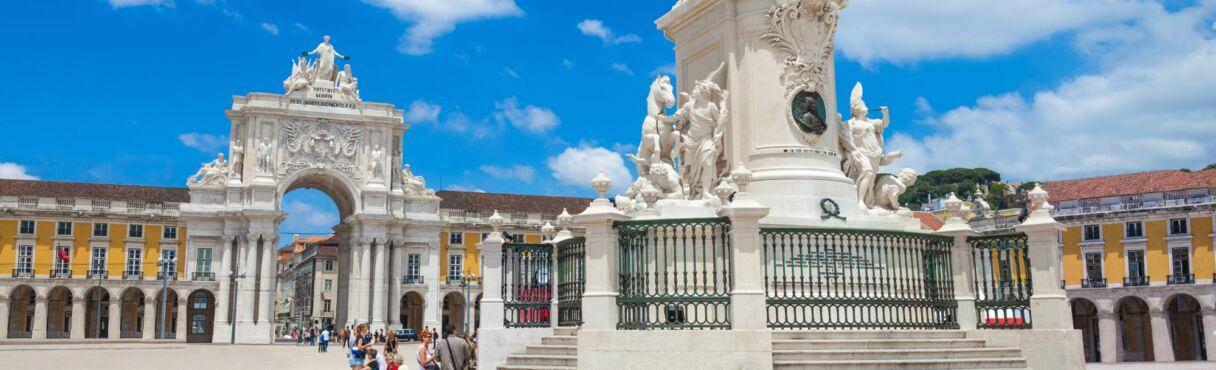
1) Praça do Comércio
The squares in Lisbon can serve as a little escape from the tight, often very steep, alleys of the city. The Praça do Comércio welcomes you to the center of Lisbon and is surrounded by 18th-century uniform buildings used mostly for government offices now, conjoining at the triumphal archway Arco da Rua Augusta. This square takes you through to the south end of Lisbon’s central districtCidade Baixa (‘lower city’) a district that was rebuilt following the aforementioned natural disasters of 1755.
2) Praça do Rossio
This square is said to be one of the liveliest in Lisbon and is full of popular restaurants, bars, and shops surrounding the Coluna de D. Pedro IV (Column of Pedro IV of Portugal) at the heart of the square, a monument to their ‘solider King’. At night this expansive Praça is marvelously lit up, highlighting its grandiosity. Consider trying some of Lisbon’s diverse range of delicacies here, perhaps at the popular Café Nicola which dates back to the 18th century!
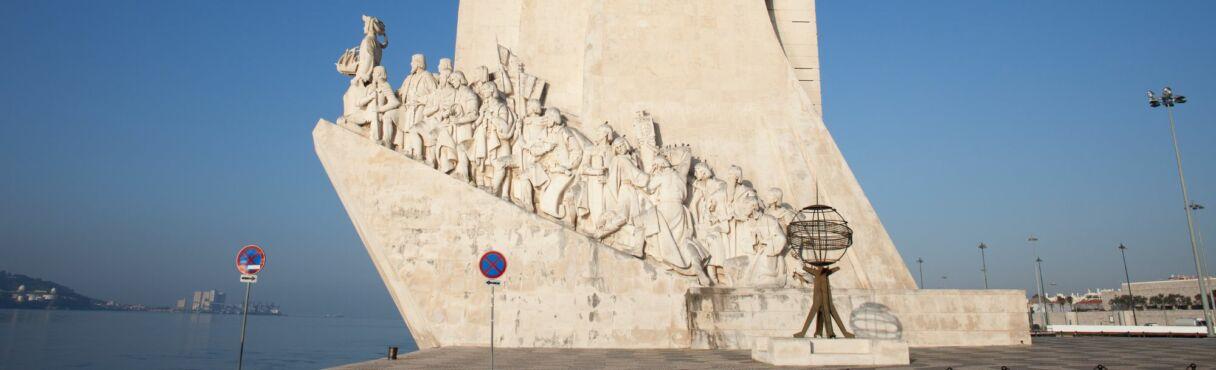
3) Monument of Discoveries
At the edge of the Belém region, situated by the Tagus River, awaits this spectacular monument stretching 170ft (52m) tall celebrating Portugal’s maritime past. Officially unveiled in 1958 as a homage to the exploratory feats of Portugal’s ‘Age of Discovery’ (15th-16th century), this limestone giant displays 33 figures -each 7 metres tall- ranging from navigators, sailors, knights, monks, to poets and artists.
You can even enter the monument as the interior was remodelled in 1985 into the Centre Cultural das Descobertas and take an elevator up to witness a grand panoramic view of the city’s jewels such as the Jerónimos Monastery and the Ponte 25 de Abril Bridge.
Neighbouring the Padrão dos Descobrimentosresides two UNESCO world heritage sites, merely minutes away from one another, see below.
Not far from the Baixo parish, you can find the Alfama quarter, the oldest part of Lisbon, and wonder at the grand Castelo de São Jorge. Named in 1386 to honour England and Portugal’s alliance. Originally established by the Romans in 200BC, this castle was rebuilt following devastations of the 18th century and now proudly overlooks the historical centre of Lisbon. With grand fortified battlements, medieval royal quarters, and vistas of the Atlantic, this national landmark is a must-see to appreciate the city’s royal and military history.
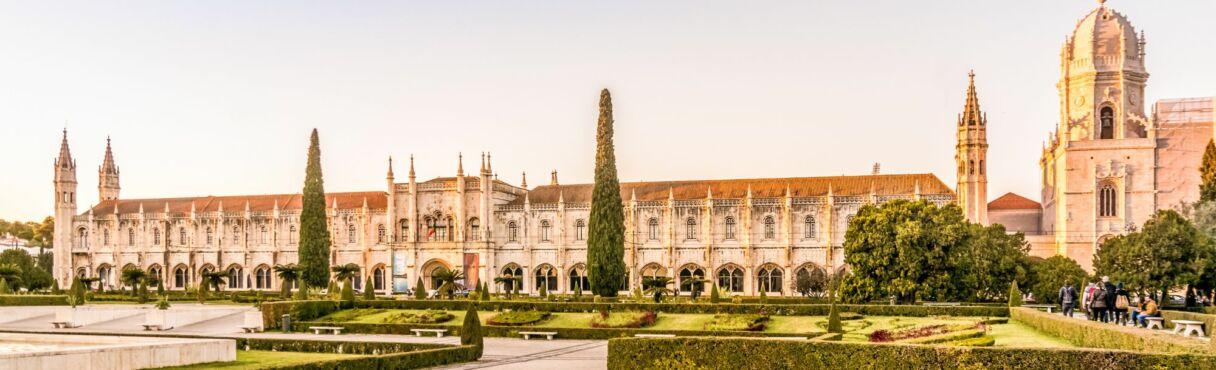
Following the Torre, you must pay a lengthy visit to the Mosteiro dos Jerónimos, known too as the Hieronymites Monastery, also in the Belém parish. Evident from its name, this UNESCO World Heritage site served once as a religious sanctuary for the residents and now proudly exemplifies Lisbon’s maritime triumphs. Its construction began in 1501 and was finished 100 years later. With its Manueline architecture constructed in gold-coloured limestone, sculpted columns, ornate arches, and vast cloisters, it’s a must-see masterpiece of the city.
6) Lisbon Cathedral
Built in 1147 and having claim to being the oldest church in the city, this Romanesque cathedral differs slightly in style from the monastery resembling more of a gothic fortress. Its robust design has enabled it to survive several natural disasters, exhibiting fascinating Roman, Arabic and Medieval remains as well as relics and treasures from the past.
Located in the Praça de Pombal, is another spectacular monument to Lisbon’s rich history; this column is centered within the roundabout and stands 23-meters high, a bronze statue depicting Sebastião José de Carvalho e Melo (the Marquis of Pombal) is mounted atop it. To get a full view of the landmark in all its grandeur, take a trip to the vast 62-acre Parque Eduardo VII (Eduardo VII Park) Lisbon’s largest urban oasis.
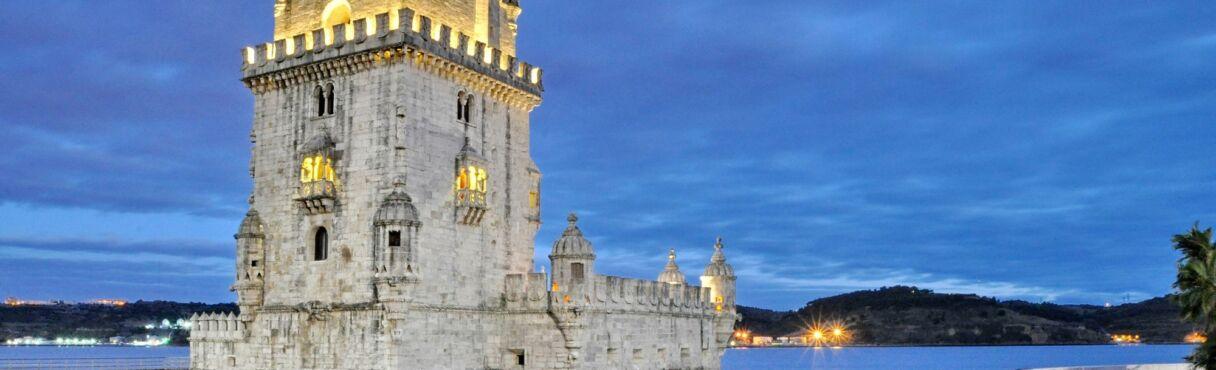
8) Torre de Belém
This ornate-looking fortification built between 1514 and 1520 once serving as a primary defense for the city, then a lighthouse, now has a claim to being one of three UNESCO World Heritage Sites Lisbon has to offer. It is certainly worth climbing this four-story tower to witness unique vistas of the cityscape from almost 100ft high!
9) Lisbon Oceanarium
This Oceanarium is known to have Europe’s largest indoor aquarium, boasting around 1 million visitors annually. With two levels, one terrestrial and another underwater, the oceanarium combines different ocean climates, temperate, tropical, and cold. Enabling them to host an abundance of species and natural phenomena (around 8000 sea creatures from 500 different species!) such as sea otters, sharks, and dazzling coral reefs. A true testimony to the oceans’ large marine biodiversity.
Named after Calouste Sarkis Gulbenkian (of British and Armenian descent), founded in 1957 according to his will, this chock-a-block museum packs in more than 6,000 artworks collected throughout the philanthropist’s life. This private and very comprehensive collection exhibits art from all around the world, from China to the middle east, Egypt, Greece, and Europe, stretching over a 5000-year period.
Open to enrollments means the course is pending confirmation. You can register now to help confirm this session, but you will need to wait for our confirmation before booking flights and accommodation.
Fully Booked means this session has reached maximum capacity and is no longer accepting new enrollments.
Confirmed means this session has reached the minimum number of participants and is guaranteed. However, you will still need to wait for our confirmation before booking flights and accommodation.


 Please wait, we're loading the information about the courses. It could take few seconds.