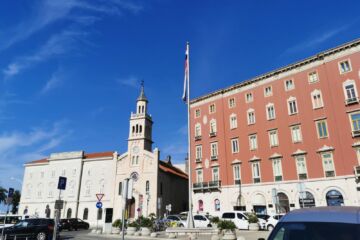
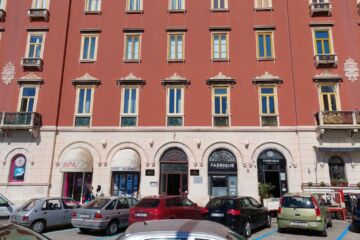
Bus stop to the most popular beaches opposite the school
More info
Please note that while these services apply to most courses, exceptions may occur. Even in locations where we have dedicated classrooms, we may occasionally need to rent external spaces nearby, and the availability of services may vary. Kids, pets, or guests within the school premises must be approved by email each time. Whether or not our premises are marked as wheelchair accessible, we kindly ask you to inform us in advance. If accessibility is an issue, we will arrange for an external classroom to accommodate your course. If you have any questions, please don't hesitate to reach out to us.
Our Cultural Activities
Free time activities in Split always include a walking tour of the city.
Other tours depend on the season and availability and may include one from this list:
Additional information will be provided with the definitive schedule, two weeks before the course start, as well as on the first day of the course, when you will receive the final details.
Our Academy in Split
Europass Adriatic Academy D.o.o., the company in charge of delivering courses in Split, is legally established in Croatia and operates under accreditation by Europass Foundation.
All our teacher training courses in Split will take place either in the morning (9.00-14.00) or in the afternoon (14.00-19.00), depending on classroom and trainer availability.
The final schedule will be sent two weeks before the course begins. We recommend planning any cultural activities only after receiving it.
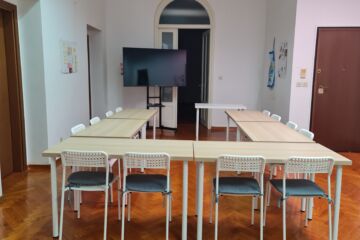
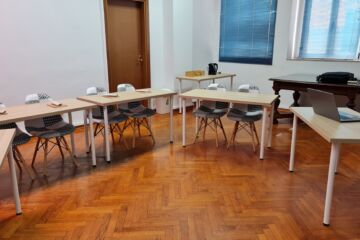
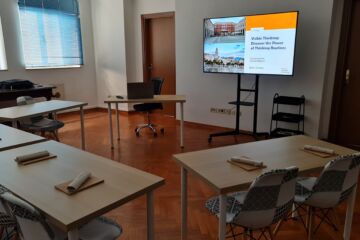
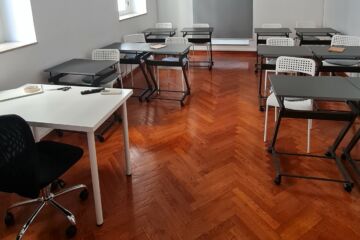
Photogallery
How to reach us
Split is primarily served by Split Airport (SPU), also known as Resnik Airport, which is located approximately 24 kilometers away from the city center.
The bus stop is in front of the airport, under the pedestrian overpass which leads to the airport from the car parking. Take bus number 37 direction TROGIR – AIRPORT – SPLIT.
If you decide to take a taxi, make sure to ask in advance how much they will charge you.
Discover the details of the Croatian educational system, history, and culture. Learn about the different levels of education that it provides and how the comprehensive Croatian educational reform influenced them.
Engage in experiential learning at museums, science centers, and art galleries, fostering conceptual understanding. Embrace active learning and experience Croatian culture and heritage, enhancing the knowledge and promoting sustainability.
Libraries of Tomorrow: Skills and Competencies for Adult and Community Education
Gain the knowledge and skills to embrace your role in an AI-driven world and utilize AI tools to enhance student learning. Learn practical strategies for identifying struggling students, creating intelligent tutoring systems, and automating tasks like grading.
Libraries of Tomorrow: Skills and Competencies for Adult and Community Education
Gain insights into best practices for implementing AI to promote inclusion. Acquire the ability to integrate AI tools into lessons and activities, in order to enhance student engagement and learning outcomes.
Libraries of Tomorrow: Skills and Competencies for Adult and Community Education
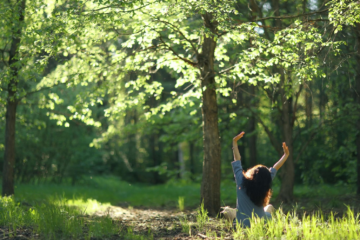
Explore the calming and restorative power of nature, and how you can bring it into your school or classroom. Experience outdoor mindfulness and creativity-based activities, and discover how nature can support your emotional well-being, even if you have a basic level of English.
Libraries of Tomorrow: Skills and Competencies for Adult and Community Education
Explore hands-on activities designed to prevent isolation and disruptive behaviors, with a focus on interaction and support. Discover effective relaxation techniques and movement-based activities suitable for special needs students and the entire class.
Libraries of Tomorrow: Skills and Competencies for Adult and Community Education
Acquire an understanding of group dynamics by discovering how tensions, alliances, and relational struggle can interfere with learning. Learn to encourage active listening, empathy, and emotional literacy.
Libraries of Tomorrow: Skills and Competencies for Adult and Community Education
Learn how to effectively integrate AI tools into your teaching, enhancing students' language skills, creativity, and critical thinking. Gain the ability to personalize teaching and support students at different language levels.
Libraries of Tomorrow: Skills and Competencies for Adult and Community Education
Engage in well-being and mindfulness activities outdoors, around city parks and gardens, and delve into nature-inspired activities during classes. Design a physical space and program to integrate nature into lessons and the school environment.
Libraries of Tomorrow: Skills and Competencies for Adult and Community Education
Explore the basic concepts of Artificial Intelligence in education to empower teachers to use basic AI tools, such as ChatGPT, to enhance teaching and learning. Learn how to use AI tools to decrease the workload.
Libraries of Tomorrow: Skills and Competencies for Adult and Community Education
Learn to establish a framework of inclusive values and practices, both within a school and in collaboration between institutions, as a strategy to deal with diversity in an appropriate and sensitive manner.
Libraries of Tomorrow: Skills and Competencies for Adult and Community Education
Acquire an understanding of the support that any external environment can provide in outdoor teaching with the aid of the right ICT tools. Discover an array of practice examples to design novel tasks and activities for the students.
Libraries of Tomorrow: Skills and Competencies for Adult and Community Education
Discover practical exercises and a legal framework for creating a more inclusive classroom atmosphere. Foster interculturality, respect, and a dynamic environment.
Libraries of Tomorrow: Skills and Competencies for Adult and Community Education
I had a wonderful experience! Marica was an excellent teacher, the classes and activities were engaging, and the atmosphere was great. I also loved the location of the academy and the beautiful city of Split. I will definitely recommend this programme to my colleagues.… More
I attended the course Artificial Intelligence Tools for Language Teachers in Split in July 2025, and it was an excellent experience. The course provided clear, practical insights into how AI can support language teaching, from streamlining administrative tasks to creating… More engaging and differentiated lesson materials. The trainer was highly knowledgeable and supportive, and the hosting organization made the stay memorable with well-organized activities and a warm, welcoming atmosphere. I highly recommend this course to any language teacher interested in integrating AI into their work.
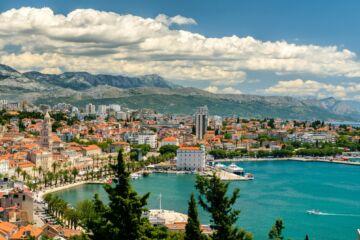
Split is located in central Dalmatia on the Split peninsula and it is surrounded by the crystal clear Adriatic Sea and beautiful nearby islands of Brač, Hvar, and Šolta, as well as by soaring mountains and hills overlooking the city.
What makes Split unique is its Diocletian Palace, a Unesco World Heritage Site, and a shooting location for “Game of Thrones”. Built at the turn of the 4th century by Roman Emperor Diocletian as his retirement residence and military garrison, the palace is the bustling heart of the city with numerous bars and restaurants, shops, and open-air markets, visited by locals and tourists alike.
Split is a popular destination for countless cultural events, such as film and theatre festivals, concerts, exhibitions, and world-class museums.
Split has a Mediterranean climate, with dry and very hot summers and mild winters. With an average temperature of 23 °C, August is the warmest month of the year, while January has the lowest average temperature of 4 °C.
When in Split, make sure that you take it easy. There is no rush. Engage in a conversation with the locals, taste delicious Dalmatian food, and enjoy mouth-watering flavors of locally grown food and wine. Or simply put, enjoy every single moment to the fullest while in Split.
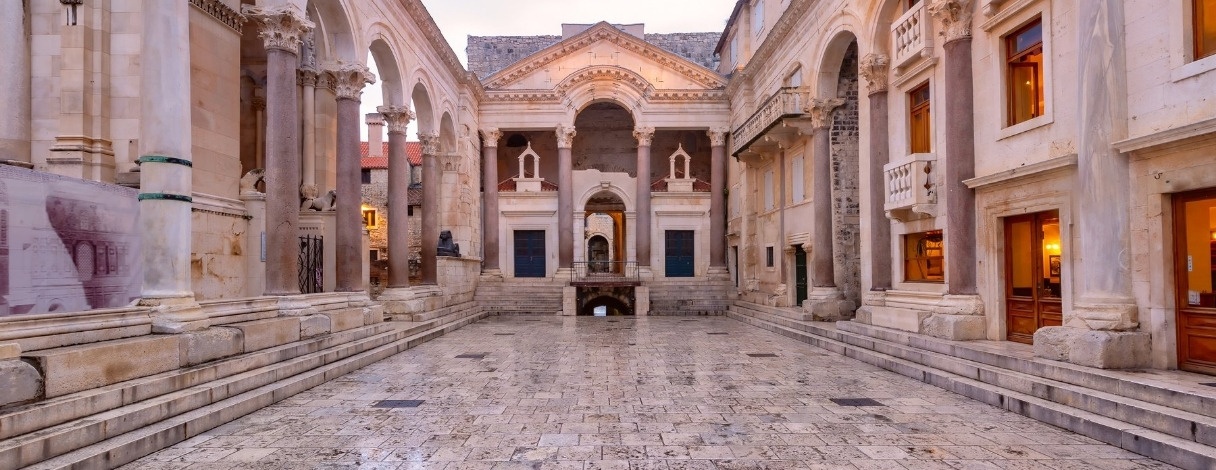
1) Peristyle
Peristyle is the central square of Diocleatian’s Palace surrounded by two rows of Corinthian-style columns connected by arches. The upper part of the square leads to the Vestibule, and the lower to the magnificent basements of the palace.
Diocletian’s Palace is the city’s most well-known cultural tourist attraction and one of the world’s best-preserved Roman monuments. Even though it is called a palace, its structure resembles a massive walled fortress. Each of the four walls has an entranceway in the middle named after a metal: the Golden Gate, the Silver Gate, the Bronze Gate, and the Iron Gate.
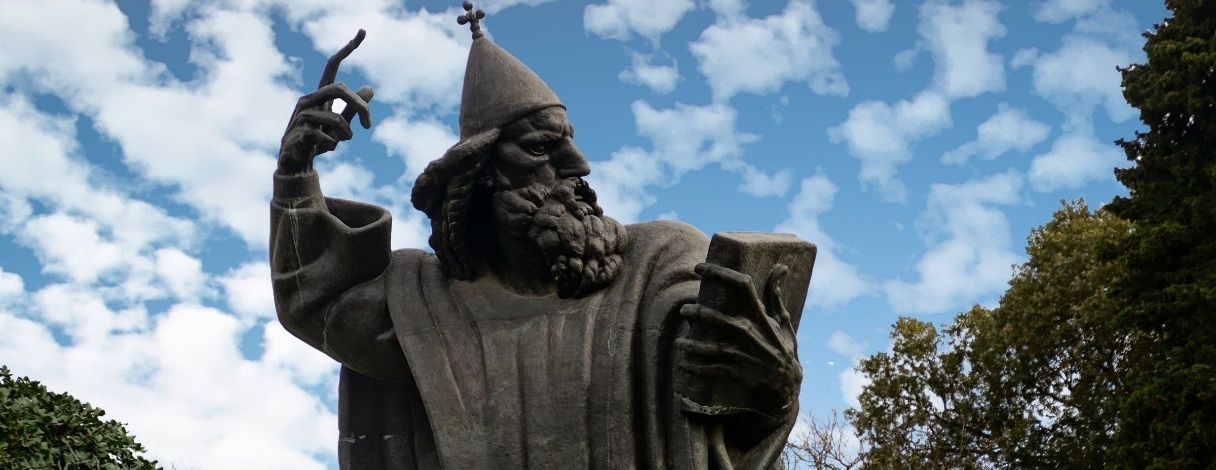
This massive sculpture of Grgur Ninski, made by one of the most famous Croatian sculptors, Ivan Meštrović proudly stands just outside the Golden Gate. Grgur Ninski, a 10th-century Croatian bishop, introduced the use of the Croatian language instead of Latin in religious services. Rubbing his left toe is said to bring good luck.
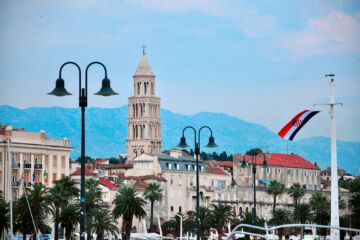
The Cathedral of Saint Domnius was built as a mausoleum for Diocletian in AD 305. In the 5th century, the Christians destroyed Diocletian’s sarcophagus and converted hir tomb to a church. The Cathedral is surrounded by 24 columns. Inside the cathedral, there is a frieze that still includes images of the emperor and his wife.
Bačvice is a huge sandy beach in the city center and the city harbor with a capacity of over 10,000 bathers. Bačvice is home to the game “picigin”, a traditional ball game played in shallow waters with the aim to keep the ball out of the water for as long as possible. Beach during the day, Bačvice turns into a famous club scene and a hotspot for young people.
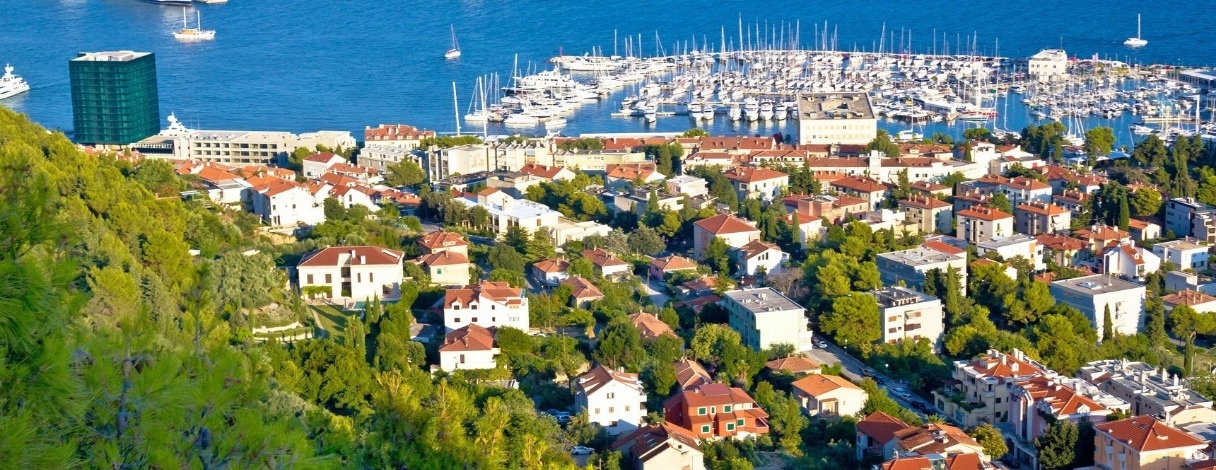
Marjan is a hill on the peninsula of Split. It stands 178 meters tall and provides a panoramic view of the city, surrounding islands, and the Mosor and Kozjak mountains. Its dense Mediterranean pine forests and peaceful pathways make Marjan a popular excursion destination and a recreational hub for locals and tourists alike.
Only a half-hour drive from Split, you will find this protected geomorphological natural monument which was discovered in 1903 and opened to the public in 1929.
Only 59 km away from Split you will find a place where you can walk on clouds. Skywalk is 1228 m above sea level and gives an amazing view of the Adriatic Sea and the islands and on a sunny day, the view even reaches the coast of Italy.
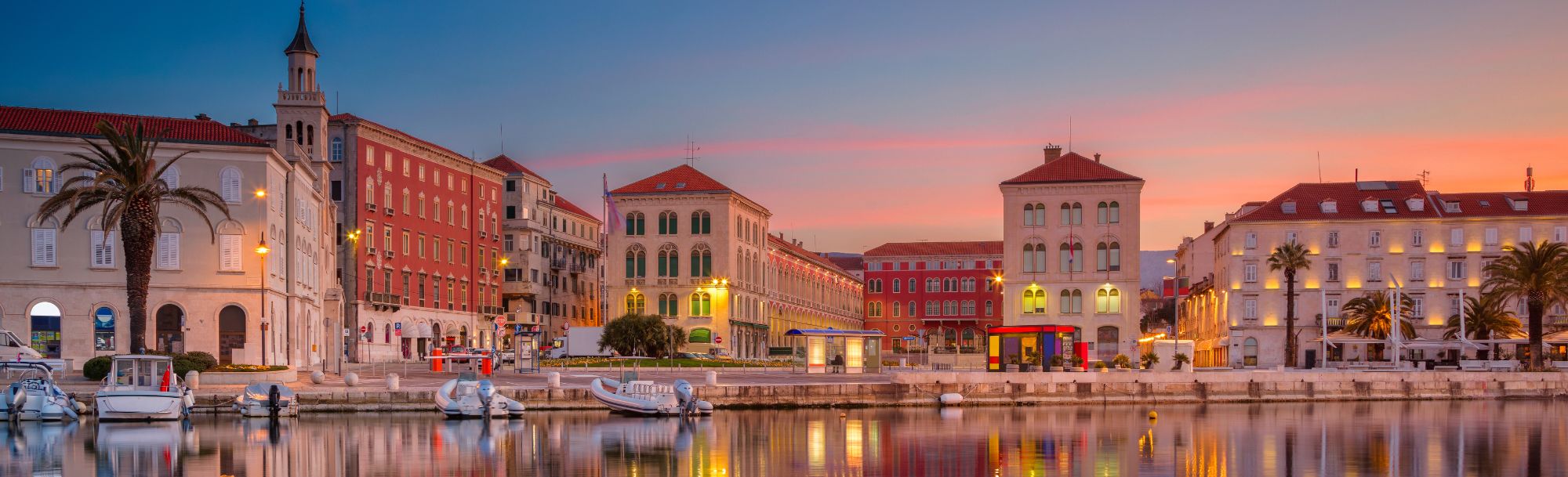
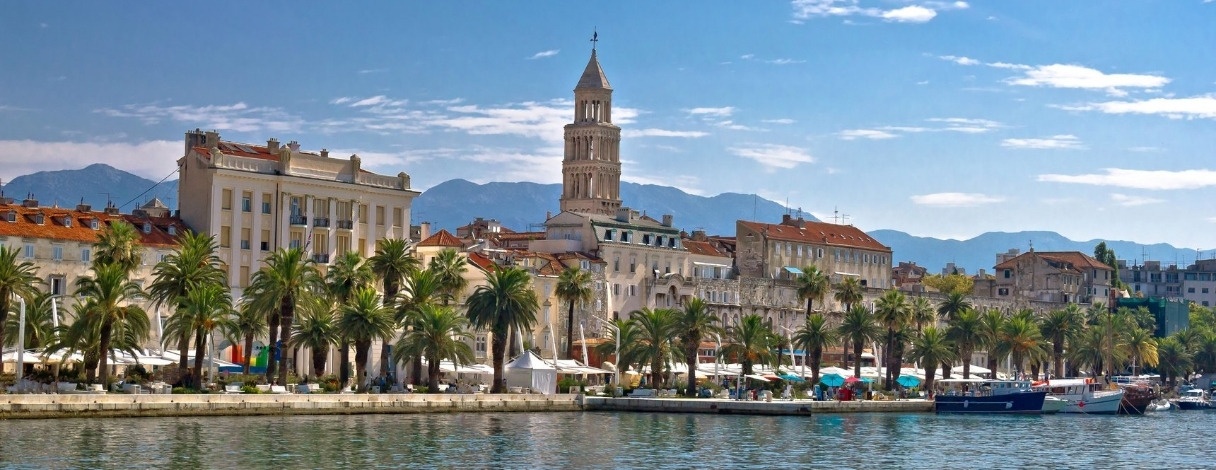
Riva is Split’s popular promenade, ideal for a morning coffee as well as for a top-notch evening out with friends. Riva is the heart of Split’s city life, hosting a variety of cultural and entertainment events, such as the Split carnival or the Festival of St. Domnius.
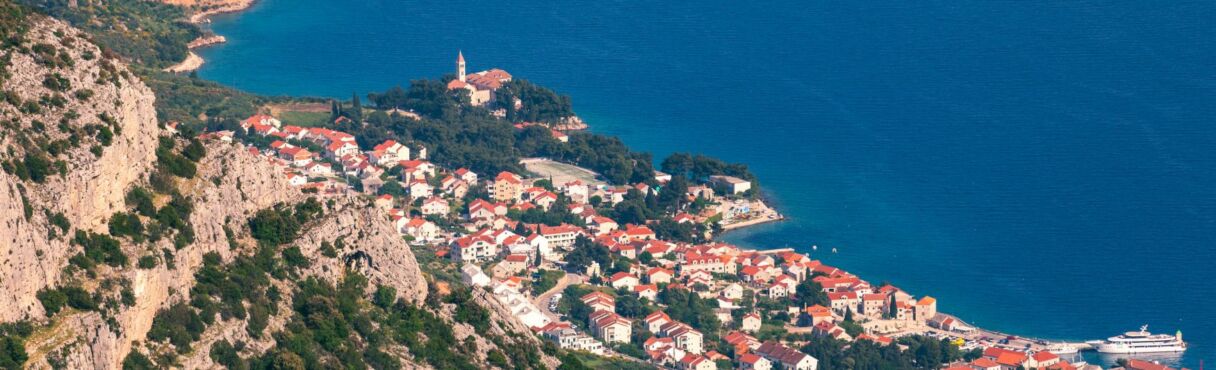
The city of Makarska is awaiting you at the foot of the mountain Biokovo. You can have lunch at one of many restaurants by the sea or have a rest on one of the popular beaches that you can reach on foot in less than 20 minutes.
11) Brač
The Island of Brač is within an hour’s reach from Split. The ferry stops in Supetar, a typical Dalmatian town with small restaurants and beautiful beaches. From Supetar, you can visit Vidova Gora, the highest point on the island.
Open to enrollments means the course is pending confirmation. You can register now to help confirm this session, but you will need to wait for our confirmation before booking flights and accommodation.
Fully Booked means this session has reached maximum capacity and is no longer accepting new enrollments.
Confirmed means this session has reached the minimum number of participants and is guaranteed. However, you will still need to wait for our confirmation before booking flights and accommodation.


 Please wait, we're loading the information about the courses. It could take few seconds.